The holiday of Simchat Torah is fast approaching, and with its arrival Jews around the world will rejoice that the yearly Torah cycle begins again this Shabbat. Every week, a Torah portion will be read out loud in Synagogue, starting with Parshat Bereishit in which the world is created. As each Torah portion unfolds, the story of the world, the Jewish people, and so much more is told. Every year the words are the same, and yet every year I find new meaning because I, and the world I live in, have changed.
Inspired by several of the wonderful works of nonfiction I’ve reviewed recently, (still glad we decided to expand the nonfiction section), BookishlyJewish would like to ask our readers to consider reading the original Jewish book – the Torah – with us. Each week we’ll post up a thought on the coming Torah portion, and a Jewish book that helps illustrate that point. Ideally, we’ll have those selections up by the Thursday the parsha is read, although thanks to holiday, the book pairing for Bereishit will post this Friday one day before we read it on Shabbat.
I am not a Torah scholar. I have no Rabbinic training, but I firmly believe every Jew can read and learn from the Torah if they wish, and share their thoughts and reactions with the wider world. Therefore, I’ll be reading each portion and choosing what I find meaningful to me – even if it’s just one sentence that struck a chord. I will be using a Stone edition Chumash, because while my biblical Hebrew is actually fairly facile, I’d still like the English translation handy, and it has both Rashi and Targum commentaries without crowding the page in tiny print. In depth learning with centuries of commentary is something I hope to inspire some readers to perform, but for this project, the goal is a reading of the pshat – or simple meaning of the words – with help from what most people consider the two most basic, necessary, explanatory commentaries. Readers can then go back and read the portions that most resonate with them and include all the commentators they wish.
Book selection is not be limited to nonfiction, or books sans sex and swearing. Everything from high heat romance to picture books is fair game if we feel it has a pertinent lesson to share. As always, we have to know a book exists to consider it, so please feel free to fill out our suggest a book form with Jewish books both new and old, for consideration. Similarly, if you would like to guest post a week, send in a pitch for us to consider. However, know that this project will have a much higher bar for guest posts than book reviews and round ups.
We are still a site that mostly focused of book reviews, round ups, publishing interviews, and lists, but this is a project dear to my personal heart. If it doesn’t speak to you, just skip the Thursday posts and focus on the reviews and gifting guides. I hope you’ll give it a chance though. I am a person of the book, and I’d love if you would read along with me.
by: Christina Matular with Erica Lyons, Illustrated by Tracy Subisak
September 10, 2024 Quill tree Books
32 pages
Half the fun of Sukkot is the way it always feels like a gamble. Sitting outside in temporary huts with limiting roofing can be a great way to enjoy the early Autumn breeze while soaking up those last rays of fading summer sun. Alternatively, the lack of weatherproofing on these structures can mean rainy days full of falling water-logged decorations and a mad dash towards the regular house as the skies open and everyone grabs their plates so the food won’t be ruined by the deluge. As an adult, this is decidedly less fun than it was a kid, but it is entirely symbolic of the holiday.
Sukkot commemorates our Jewish ancestors travel through the dessert in temporary homes. Reliance on God was complete – for food, water, protection from the elements and neighboring tribes. Sure, it didn’t rain all that much, but I’m sure there were other duck and cover situations. The most confusing thing about the holiday is its timing. Passover, which celebrates the exodus, is celebrated in Spring. So why is Sukkot celebrated in the Fall and not immediately after? One answer is that the unreliable weather is entirely the point. In the Spring we would likely not have the same extremes of temperature and precipitation as we do in the Fall, and thus it would be much easier to celebrate and forget about the crucial reliance on God. It also a time of last harvest before winter – another great time to rely on God or whatever supernatural forces a given culture reveres.
In Mixed-Up Mooncakes, a sweet picture book written by Chrstina Matula with Erica Lyons and illustrated by Tracy Subisak, a multicultural family family celebrates both Sukkot and the Mid-Autumn Festival. Little Ruby helps her Zayde and her Nainai pick out items for the celebrations, but the eponymous mooncakes – a mash up of both celebrated cultures – are her very own invention. Friends and family gather round in the Sukkah to eat the treats together, and from the illustration it appears they luck out and have beautiful weather.
Mixed-Up Mooncakes is a reminder that there are many cultures out there celebrating this Autumn, and that many in our communities are finding new ways to blend their families cultural heritage. Reliance on God for a good harvest, good weather, and enough to last us through the winter is just as universal as friendship and family.
To be a woman in this world is to walk a slippery tightrope for the entirety of your existence. You can’t be too much, too little, too sexy, too prudish, and forget about ownership of your own body and other peoples demands on it. Some female writers choose to publish under their initials to avoid that scrutiny, and the mis-shelving that comes along with it (just because a woman wrote a book does not automatically make it YA). This quest for an ever shifting and completely unattainable ideal of perfection is especially evident in the entertainment industry where women are commodified and discarded by the thousands. There’s been a spate of nonfiction books chronicling this phenomenon through biographies of the pop singers of the early aughts, but Jennifer Weiner’s The Griffin Sisters’ Greatest Hits, uses this fertile ground in a work of fiction that manages to convey the complexity of simply existing as a female in the public eye.
Weiner is a bestseller, so many of you might be familiar with her other works, but this was the first one that I have read. As a person who has struggled with both my appearance and the idea that I might never be more than competent at my chosen form of art, I highly identified with every single character in this story of two sisters achieving fame and fortune before their band falls apart disastrously. The Griffin Sisters’ unfolds through a series of both present day and flashback multi POV narratives and is geared more towards an emotional read than a suspenseful one. The twists are not shocking, but rather layered with emotional depth.
Zoe, the “pretty” sister is determined to be a star no matter what it costs her and those around her. Unfortunately, she’s a whole lot less talented than her sister Cassie, who she drags along on the ride to fame since without her, Zoe wouldn’t be able to procure a ticket. I’m not going to sugar coat it. The things Zoe does are deplorable. Stating from the very first meeting with her producers when she suggests changing her last name to sound less Jewish, Zoe makes all the worst moves for all the wrong reasons (not judging anyone who has to do that, we live in an unfortunate world, but Zoe doesn’t show any self awareness that it’s a regrettable concession. She happily signs away her identity in exchange for a chance at a recording contract). Even her present day character doesn’t seem to have learned from her past mistakes. I did not like her. But I understood her.
I am not a writing prodigy born with the great American novel dripping off my pen in kindergarten. I’m a person that was good enough to get praised in school, and achieve a modicum of success as an adult in an art form few people read. I’m lucky in that craft work can seriously improve one’s writing if they are willing to put in the time, and that perseverance is half the battle. Enough sweat equity can give you a good story that will entertain at least some of the readers that consume it, which is all I’ve ever striven for, but it is no match for the miracle that happens when someone with an innate gift puts in that same work. Those books change lives, and I am not likely to ever write one. But I have had the honor to read for several individuals that have that gift, and I would be lying if that didn’t sometimes leave me wistful. The difference between me and Zoe? That person for her is her sister. Her socially awkward, overweight, and likely neurodivergent sister that she has had to look after for her whole life. I can feel happy for my talented friends and not see it as a reflection on myself, but it’s impossible for Zoe not to compare or to wonder why nobody wants her music if it doesn’t come along with her sister.
It is one of Weiner’s particular strengths that Cassie, the gifted sister, gets a similar treatment. We enter her head and feel what it is like to be fat, to be left out, to be so shy as to not be able to sing unless your sister sings with you despite having a voice that brings people to their knees. She is a woman of much smaller demands than Zoe, she does not need fame, nor does she desire fortune. Her biggest ask is something that is freely given to Zoe, and so clearly denied to her at every moment of their intertwined lives, that the here too the reader can’t help but feel the irony. Zoe has every guy in the band wrapped around her finger, meanwhile Cassie cannot even imagine what it would be like for someone to want to love her. Zoe might trade it all for fame, but Cassie would do the same to be loved, and desired, for even a fraction of the amount that Zoe inspires in the people who see her. Is it any wonder these two sisters end up using and betraying each other in such terrible ways?
Part of existing as female (in the U. S. at least) includes facing some unpleasantness that Weiner does not shy away from. Readers should go in knowing there are a lot of descriptions of Cassie’s weight, of how others view her, as well as dieting. It is not an easy read and I left a few of the male viewpoints, and some of Zoe’s too, convinced that all people are shallow and gross. Similarly, some of Zoe and her daughter’s experiences of sexual abuse were very visceral. Readers should take care when reading, but these depictions were essential to the plot, and they were nuanced enough to also include the myriad of ways women neglect to protect and support each other.
The Griffin Sisters’ Greatest Hits drew me in much like Cassie’s music draws in the audience. I embodied each of these complicated women, their motivations, their sorrows, their desires. I left wanting to be more kind to myself, more generous to the people around me. We are all created in Gods image, and Zoe and Cassie reminded me of that. Plus there were Liz Phair and Veruca Salt references. That’s all I really need in life
When I was a teen, the holidays of Passover and Sukkot were my version of Spring Break that came twice a year. My Jewish day school went on vacation for the entire 8 day holiday, which somehow resulted in two weeks off from school. Yes, I know eight days is not two weeks. Yeshiva Day School administrators clearly use a different kind of math. Regardless, I was home for a long stretch of time and I didn’t mind in the least. I would walk myself to the library in preparation and emerge with two bags packed with books. Sometimes, they would last, sometimes they wouldn’t. I was a much faster reader back then. The key was to pick books that could hold my imagination long after I finished them. Which is why this Sukkot, I’m recommending The Art of Exile by Andrea Max.
The Art of Exile follows young Ada Castle as she tries to infiltrate a hidden, advanced, technological society known as The Makers, in order to help her family bring Maker technology into the wider world. Basically, Ada’s got a lot of secrets, not least of which is that she has the exact kind of genetic ability to manipulate life force that The Makers are looking for. She also has a great sense of humor, as evidenced by her hilarious comments on the map that accompanies the book, and an uncanny ability to get kidnapped. She’s always felt less worthy than her highly accomplished friends and relatives, but during her time with The Makers Ada slowly realizes she has gifts of her own, and becomes increasingly conflicted about her loyalties to her family vs. The Makers.
While everything is couched in science words like “genetic ability,” make no mistake. The Art of Exile is a magic school book. The science is extremely hand wavey, and all the trappings of a magic school book are present, including a wonky sport the main character is somehow naturally gifted at playing, a whimsical mode of transportation to and from school, students divided into houses or disciplines based on ability, and the mysterious yet sage headmaster who shows up to deliver cryptic advice. If you don’t like magic school books, this won’t be the book for you. But if you do – you, like me, will spend the next two weeks wondering what special projects you would present at your Gallerie so that you could be selected by a desirable discipline.
Along with all the spying intrigue, there is also a love triangle, but I’m hoping that a third option presents itself in the sequel since I didn’t feel either of these guys was right for Ada. The book is low heat for an adult reader, moderate for a YA reader, and while the main character is straight there are several queer side characters providing additional representation. There are many allusions to other characters having sex, and one character is portrayed as wildly promiscuous, but nothing other than kissing actually happens on the page. So don’t worry about reading on the train or in your living room with the entire assembled family who are also on extended holiday vacation. In terms of Jewish rep, Ada’s father is Jewish, one of the love interests is Jewish, and there are several Jewish mystical concepts (albeit with different twists in Maker society) that appear in the book. It’s billed as cross over, but I felt it was solidly in the YA camp, and adults who read YA will enjoy it too.
For those who care, the story of the first book does wrap itself up, and contains one genuine surprise you won’t see coming. It’s the last chapter, where we are setting up for the sequel, that ends on a cliffhanger that most readers will see coming from a mile away. I am usually annoyed when there’s a clear lead in to a second book that isn’t available yet, but in this case I was fine to wait for the sequel as the primary plot did have a full treatment. The Art of Exile is a world that will pull you in, make you wish you could visit, but mostly it’s just plain fun. Which is exactly what I need around a long holiday.
Note: BookishlyJewish received an e copy of this book from the author after we asked for one.
As A Jew: Reclaiming Our Story From Those Who Blame, Shame, and Try To Erase us.
by: Sarah Hurwitz
September 9, 2025 HarperOne
320 pages
Having greatly enjoyed Sarah Hurwitz’s first book, Here All Along, in which she rediscovers Jewish tradition after a life of mostly what she refers to as secular or cultural Judaism, I knew I had to read her latest book, As A Jew. I went in expecting the continuation of her Jewish Journey. I was unprepared for the breadth and depth to which she tackles some of the most difficult topics Jews face today.
As noted in my review of Here All Along, Hurwitz and I are from very different backgrounds. As A Jew opens with an honest discussion of the internalized antisemitism and shame many Jews who grow up in majority non-Jewish or secular Jewish communities face. As a minority, even within the Jewish minority (ultra orthodoxy, the Judaism that even other Jews often sneer at), I had a big advantage in that regard. I grew up immersed in the ‘iz gut tzu zein a Yid – it is good to be a Jew’ mentality. In fact, one could argue that Hassidism is the OG Jewish Joy movement. The very pride and joy that Hurwitz notes many Jews lost during the enlightenment and associated cultural assimilation that followed, was ever present in my community. Probably because while our communities may have lacked walls and gates, they were still self imposed ghettos. Shame wasn’t our problem (and I am honest enough to admit we have many problems that other branches of Judaism do not). However, I did grow up in a majority Christian country, and I couldn’t help but notice how the world at large treated us like sad relics. People toured our neighborhood as if it was a living history museum – except significantly less national pride inducing than colonial Williamsburg. I understood why Jews who grew up in more open communities seemed to regard our form of Jewishness as embarrassing, or something to be covered up when out in the larger world.
Hurwitz is extremely thorough in examining how the worlds stereotypes for Jews came into existence (this was my favorite part, as we don’t tend to learn history of Christianity and Islam in yeshiva, just the associated crusades, expulsions, and pogroms), as well as how they have infiltrated the Jewish psyche. She is measured, she is clear, and she is a joy to read. Sometimes I was terrified and in despair of the endless cycle of history repeating itself, but always there was hope. For Jewish readers, even those with firm grounding in Judaism and Jewish text and culture, As A Jew, will give you back a piece of yourself. For non-Jewish readers, it will ask you to rethink certain internalized prejudices you may not even realize you are carrying around and make you a more critical receiver of information.
I am sure every person will have their own favorite chapter, but mine was when Hurwitz proclaims that even secular Jews should study and access our textline. Scholarship and knowledge – even from people who have no intention of ever being Rabbi’s – is a hallmark of our tradition. Forging more connections with Jewish texts has been the highlight of my adult spiritual life. As you can probably tell from this blog, I consider myself a person of the book. We’re even going to be announcing a special new Torah relevant feature for BookishlyJewish next week, trying to get more of our readers to engage with both ancient and modern Jewish texts.
There’s too much in As A Jew to go over piece by piece, so instead I will assure you that if there is a topic in Judaism that makes you squirm, feel uncertain, or wish other people would not ask about – Hurwitz has tackled it and mapped out why you are uncomfortable and what you ought to be doing about it. I don’t know what ground she’s left for her next book, but believe me, I will be reading it.
Note: BookishlyJewish received an ARC of this book from the publisher after we asked for one.
It’s been a weird two years. Which is a generous adjective to use, but I’ve always liked to think of myself as a giving person. It’s difficult, even for writers who trade in words for a living, to describe what it’s like to exist as a Jew right now. Even my choice to use the word “exist,” rather “practice” or “observe” required debate and conscious thought. That’s because Judaism is not simply a religion. It’s a culture, a faith, or if we want to get fancy, an ethnoreligion. It’s almost as if being Jewish is an accident of birth that can be converted into but not out of. Jews come in all shapes, colors, and sizes. Therefore, “being Jewish” means a whole lot of different things to different people. The charity anthology On Being Jewish Now, edited by Zibby Owens, collects the reflections of Jewish writers and entertainers on what being Jewish in this moment means to them.
There’s a mistaken notion that On Being Jewish Now is a book about Israel and/or antisemitism. It is not. As I said before, Jews have a very wide variety of experience. Some of the essays will necessarily touch on Israel and antisemitism because they are relevant forces in the author’s life, but plenty of them do not. The unifying factor is exactly what is promised by the title. These reflections are about being Jewish and what that means for each of the 75 individual contributors. Some pieces are funny, some are tragic, some involve religious observance and some are as secular as watching football on Shabbat while munching bacon strips. Short of actually meeting and talking to Jews (note that talking implies respectful exchange of words and ideas, not unilateral shouting), reading On Being Jewish Now might be the best way to actually get to know us and our wide swath of diversity.
In that vein, I’ll share a little about what being Jewish now means for me. Some days, I’m afraid to leave my house. I leave anyway, because I firmly believe that minority groups should not voluntarily exclude themselves from public spaces due to fear. I push the raging anxiety down, which results in a host of unhealthy effects ranging from hair loss to hives to weight fluctuations. I put on a happy face anyway, reminding myself that I might be the only Jew some people ever meet in their entire lives. Basically, I’m an ambassador to people whose collective ancestral psyche tells them I’m the bogeyman.
I’m a living fossil, and an endangered species.
I’m also fiercely proud and find tremendous joy in my religion. This is not new. Jews – including atheist Jews!- have clung to Jewish identity even when pressed by thousands of years of crusaders and inquisitors. One of the few good things I’ve seen come out of the dumpster fire that is the current state of affairs on planet Earth is the Jewish Joy movement. Jews from across denominations have stopped apologizing for our existence. Instead, writers are publishing Jewish stories that have nothing to do with persecution and hate. Casual Judaism is appearing in stories and on the media. As a person who has only ever practiced one form of Judaism, it has been so moving to interact with and learn about the full spectrum of our people.
In short: being Jewish now is complicated. Which is actually what On Being Jewish Now is about. Was this anthology perhaps a bit rushed? Did a few pieces feel like they were in the wrong categories? Sure. But that’s part of the experience too. Nobody has the luxury of time any more. Existence is a constant series of crises begging that we do something right now, right away. These authors did something.
The piece that moved me the most was contributed by Lihi Lapid, but there were many worthy contributions, each giving insight into a different experience. The world would like to think Jews are a monolith (an evil monolith at that). We are not. We contain multitudes, and if you crack open On Being Jewish Now and read even 2-3 pieces at random, I think you’ll realize that. This isn’t just a book for Jews. It’s a book for everyone willing to try and understand.
How The Talmud Can Change Your Life: Surprisingly Modern Advice from a Cery Old Book
by: Liel Leibovitz (read by the author)
October 10, 2023 W.W. Norton and Company
272 pages (8 hours, 31 minutes)
A while back I started participating in a daily Talmud learning program. Founded in the 1920’s, the Daf Yomi program sought to bring world Jewry together regardless of religious observance, geographical region, or cultural heritage by having everyone study the same page – daf – of the Talmud together. It has been uniquely popular: from ultra orthodox groups learning in yiddish, to Modern Orthodox learning via Podcast, to completely unaffiliated Jews enjoying Miriam Anzovin’s Instagram reels in which she reacts to the daily teaching (but notably makes a point of stating she is not intending to teach but rather to give a truthful reaction. She listens to ones of the podcasts), Jews everywhere enjoy this daily bit of Torah. It is not meant for in depth study, that would take far longer, but rather to give learners a sense of background and grounding in their Judaism. It has been tremendously eye opening and enriching for my personal spiritual practice, with one exception: I kept wondering who in the world all these people referenced are.
The Talmud takes a lot for granted. Back in the day, all of this Torah was oral tradition and it was only written down in the mishna in the 3rd century CE and later the expounded on in the talmud somewhere around 500 CE. Before that, scholars knew vasts amount by heart, including the books of the original Jewish Bible. References fly fast and furious to biblical texts that the authors assumed readers would have at the tips of their fingers. As someone who received a firm grounding in the Hebrew Bible I was very pleased to see how many of these I was able to quickly recognize. However, when it came to references to all the biblical scholars in the misnah and Talmud I was totally and utterly lost. Possibly because as a person born female, I was not taught any of this in school as it wasn’t considered important for my education (although the actual Talmud contains numerous stories in which woman are shown to be knowledgeable, or lose court cases due to the fact that they were expected to have a working knowledge of Talmudic law and did not). So when I picked up Liel Leibovit’z book How the Talmud Can Change Your Life, I was delighted to see the chapters were arranged based on the life stories of the various pairs of scholars that regularly feature in the book.
Side note before we go further – very few woman are named in the Talmud, instead being referred to as the wife or daughter of a man who is named. If you want to learn more about these wonderful women, and grapple a bit with how the Talmud treats women – I highly suggest reading The Mad Woman in the Rabbi’s Attic.
Leibovitz, who reads the audio book himself, explores how the lives of these scholars and their decisions when compiling the Mishna and the Talmud can teach us relevant lessons for today. And indeed, the lessons are extremely relevant! There’s even one chapter that writer’s will love that deals with the universality of story and how the Talmud is an enduring work of literature. It shows us when to break and when to hold firm, how to make decisions regarding leadership, and such tough questions as how to root out the bias inherent in ones life’s work. It does so in the framework of both modern stories like the founding of the Dewey decimal system (yep, that’s the chapter about bias) and the lives of the Talmudic scholars.
The lessons were great, but the history of the Talmud was invaluable to me. You see, the Talmud is considered a book without a beginning or end. Sure, it’s organized into Tractates, and most children start learning with the portion on prayers (Tractate Brachot), but that’s a construct we impose on the text. You can jump into Daf Yomi at any point – and should start with the same page as the rest of the world is on! – and some scholars devote their lives to learning one or two tractates extremely in depth so as to be able to make practical rulings on the referenced contents. I myself jumped in at Tractate Gittin which deals with the laws of divorce. The Talmud throws around references to the other Tractates and scholars from a variety of time points, assuming you know exactly what they are referring to, even if in our modern order you haven’t got there yet. Because there is no “getting there”. You’re supposed to be continually learning them all. Which is kind of beautiful, but also very confusing for someone like me. Leibovitz’s summaries seriously helped me out and made my learning much more enjoyable.
I read this book via audio book, and it is my favorite kind of audio in which the author is also the narrator. Leibovitz’s accent when speaking Hebrew or Yiddish did occasionally throw me, mostly because people with a similar accent have previously forbidden me from learning Talmud. Leibovitz himself is clearly welcoming and encouraging all sorts of people to learn, regardless of gender or affiliation, so this was entirely about my past unfortunate experiences and I’m hoping it helps mend that particular hurt a little for me. His enthusiasm for the subject matter is clear, and he makes a great case for the relevance of Talmud to our modern lives.
If you are thining of starting some Talmud learning but not yet ready to commit, or if like me you are years in and still looking for some additional background, or even if you are up to speed on all of this but just want to hear someone else’s perspective, then How the Talmud Can Change Your life, will be an enjoyable read for you.
It’s that time of year again – when Jews across the world try to explain to their employers that they need to take off a ridiculous amount of time from work because actually Hanukkah isn’t our major holiday. Rosh Hashana – the Jewish New Year, Yom Kippur – the day of atonement or judgement depending on if you’re a glass half full or half empty type of person, and Sukkot – which many people think of as a Fall harvest holiday but also commemorates our ancestors journey through the dessert – are our big block of holidays, and they don’t occur anywhere near December 25. Sorry not sorry.
This year is particularly rough on those of us forced to use our vacation days to celebrate, since most of the holidays fall out in middle of the week. Bright side? Tons of days for reading! Check out some books that either feature the holiday or are good fits for reflection and repentance.
Middle Grade Fiction
Forgiveness and reparation is a common theme for middle grade books, which makes them a great pairing for Rosh Hashana and Yom Kippur. REPAIRING THE WORLD by Linda Epstein features a young lady getting over grief, and gives readers a window into Reconstructionist Judaism while also including both Rosh Hashana and Yom Kippur. THE MANY MYSTERIES OF THE FINKEL FAMILY by Sarah Kapit has an autistic main character learning important lessons about family secrets during the High holidays and THE DUBIOUS PRANKS OF SHAINDY GOODMAN by Mari Lowe features an Orthodox girl getting it all wrong and then trying to make it all right again on Yom Kippur. For our young poets, THE MAGICAL IMPERFECT by Chris Baron is a novel in verse that features both holidays as does HOW TO FIND WHAT YOU’RE NOT LOOKING FOR by Veera Hiranandani which is told in second person narration.
Finally, one of my favorite books, ANYA AND THE NIGHTINGALE by Sofiya Pasternack, actually begins with Anya building a sukkah – the ceremonial hut Jews build for the holiday of Sukkot. Then she takes off on some madcap adventures with a dragon and the tsar’s fool before everyone can actually sit and enjoy the sukkah.
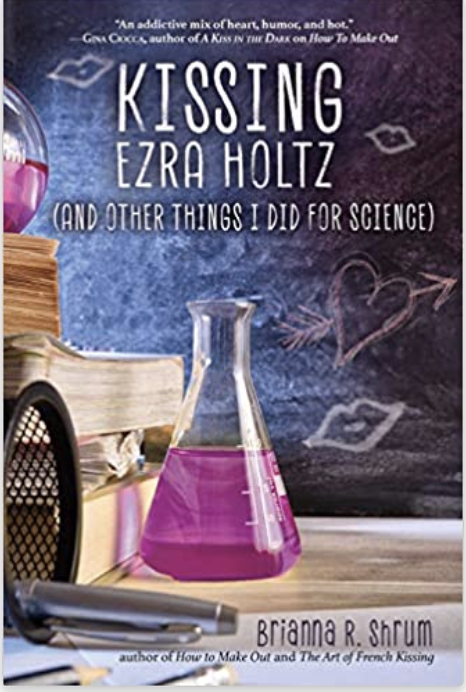
If you want the full spectrum of emotion, try reading Leah Scheier’s poignant story of grief and friendship THE LAST WORDS WE SAID, followed by Brianna Shrum’s hilarious KISSING EZRA HOLTZ AND OTHER THINGS I DID FOR SCIENCE which features and incredibly sexy sukkah scene. Then throw in some super hero Jewish witch adventures in Suzanne Walker and Wendy Xu’s sukkot graphic novel MOONCAKES.
For the younger YA set, we have D.J. ROSENBLUM BECOMES THE G.O.A.T. by Abby White in which D.J. sets out to solve the mystery of her cousins death and has a real wallop of a Yom Kippur scene.
While it won’t be out until May, I’m going to open The adult section with Dahlia Adler’s Modern Orthodox romance SOON BY YOU because this book is one the years most hotly anticipated Jewish releases. Nope, I haven’t gotten my hands on a copy yet, and I’m totally cheating because per the author it has Passover, Lag La’Omer, and Chanukah but NOT the high holidays, but I’m including it anyway because seriously I want this book and think it would have been fun to read over the holiday. Or next year over the holiday if anyone is reading this post then (people usually do dig these up in a seasonal fashion). I’ll include it in those posts too when we get to the actually included holidays.
Want a romance right now with the appropriately timed holiday? We’ve got you. Check out Home for the Challah Days by Jennifer Wilck for a small town tale of forgiveness and Meredith Schorr’s AS SEEN ON T.V. for a tale of small town disappointment in which a journalist from the big city realizes life is not a Hallmark movie, and LATE NIGHT LOVE by Chayla Wolfberg which features TV writers and a third act grovel scene in the middle of High Holiday services.
There’s actually much more out there for kids than grown ups when it comes to Jewish holiday literature. it would be impossible to go through all the available picture books, but I’d like to point out MIXED UP MOONCAKES by Christina Matula and Erica Lyona illustrated by Tracy Subisak, as a stand out for sukkot literature that talks about both Sukkot and the Mid-Autumn Festival.
ON REPENTANCE AND REPAIR by Rabbi Danya Ruttenberg is pretty much a must read for anyone looking to learn about forgiveness and repentance from a Jewish lens. Spolier Alert: It’s very different from the Christian view on these topics. FOOD FOR THE SPIRIT by Rabbi Shmuel Herzfeld has lessons gleaned from the high holiday services. Another hot release this year – AS A JEW by Sarah Hurwitz, while not specifically themed on the high holidays, felt really appropriate for holiday reading to me. Within the first ten pages she mentions the epic disconnect of living in a secular world where everyone thinks Hanukkah is our major holiday because it’s Christmas adjacent. It’s a thought provoking read.
As a writer, I often worry I’ll be remembered for the worst thing I’ve ever written. I don’t even know what thing is – doesn’t everyone alternate between thinking they’re writing gold and garbage at all times? – but the very idea of this nebulous awful piece of writing sometimes keeps me from putting new words on the page. I know this is normal, that all artists grapple with feelings of inferiority – but in the age of social media, this ever present bogey man looms large. Gone are the days when a debut is allowed to develop over a career of books that each builds on skills attained over the course of a lifetime. One bombed book, and there might not be a chance to traditionally publishing a second. Not to mention, the onus of marketing through those venues that seemed geared towards bringing out the worst in people. Which is why I absolutely devoured Gayle Forman’s Not Nothing, a book that invites us to instead seek the best in each other.
Not Nothing is two stories in one. It is the tale of Alex, who is sent by his social worker to perform community service in a senior living home. The reader is aware Alex has done something terrible – but Forman wisely does not reveal to us the nature of Alex’s crimes until we have already come to know him as a kind, caring, human who simply requires an invitation to his better self. It is also the tale of Josey, the 107 year old man that does the inviting. Having not spoken in years, Josey sees something in Alex that prompts him to open up and share his experiences during WWII, including how he was saved from the concentration camps by his Polish fiance. Pretty soon, all the residents are sharing stories with Alex, and he goes from being a suspect extra cleaner to beloved confidant.
This utopia lasts right up to the moment everyone finds out why Alex is performing community service in the first place. I won’t sugar coat it – what he has done is truly terrible. However, he is also not guilty of everything he is accused of. The way Forman manages to show us the dangers of assigning motivations to others without speaking to them, and how to reexamine our own contributions to the worst moments of our lives, without ever blaming the victim or condoning Alex’s actions, is incredibly clever. We are so quick to write people off these days. To ascribe the worst possible motivations. To assume everything is about us rather than what the other person is going through. Not Nothing invites us to reshape that thinking, much like the characters in the novel invite Alex to rise to the occasion of his life.
Not going to lie. I cried a little.
Moving on from that embarrassing admission, as this is a MG, I will point out some stuff for parents reading this review. One of Alex’s fellow volunteers and first friends has two moms. Queer parents seeking more representation for their kids of books with families that look like theirs, will find that here. There is also some very real homophobia, mental health struggles in a parent, cancer in a parent, and antisemitism. If you’re child doesn’t understand what those terms are, they might not be ready to dive in, or they might need to ask you some questions along the way. Not Nothing is a great story for kids who don’t want any romance (although Josey does tell the story of falling in love with his fiance).
Somehow, a 107 year old narrator felt very relatable. Even for kids. That is most certainly Not Nothing. In fact, it is something worth picking up and reading.
Note: BookishlyJewish received a copy of this book from the publisher.
Never has reading a book garnered so many nonsensical passerby comments than Lisa F. Rosenberg’s Fine, I’m A Terrible Person. Although this is a digital first release, I was reading the physical book, and people just couldn’t stop themselves. To be clear, these were not people who read the book, or even had any idea what was in it. They were commenting on the title. Which they universally found objectionable. Most assumed the reference to a terrible person meant the book was full of questionable, or even criminal, activity. Which struck me as odd given the innocuous image right under the title, but as I learned through reading, the cover copy and press release hadn’t given me any ability to predict the plot either.
The title refers to a phrase that one the two main characters, Aurora, uses every time her daughter Leyla brings up a question or complaint about Aurora’s destructive and manipulative behaviors. Aurora is not one for self reflection, so she just brushes Leyla off with a “fine, I’m a terrible person,” in the hopes that this sarcastic admission of guilt will absolve her from having to deal with the matter further and allow her to return to extorting those around her. Except, as the reader learns, Aurora actually is a terrible person (not in a criminal way, in a self absorbed and neglectful way). The statement serves to silence those around her who are then subjected to more of her abuses.
The cover includes the line “Can a mother and daughter, bonded by trauma, finally make peace.” The cover illustration is of Aurora and Leyla driving together, and the description says that Aurora heads to L.A. for a family funeral while Leyla is there to secretly spy on her husband who might be cheating on her leading them to share a weekend “of hijinks, chaos, and yes, even some healing”. All of this lead me to believe we were in for a road trip novel in which the two POVs manage to find peace after a series of madcap adventures. There are definitely madcap adventures, but spoiler alert – this is not a mother daughter healing story. Any healing in these pages, is on the part of Leyla who has an actual character arc. Aurora can’t, or won’t, ever change.
I’ve read and enjoyed my fair share of books that have nothing to do with their cover copy, so I know it’s possible to get past that hurdle, however there are a few things that gave me pause here. The novel is dual POV, and we spend a fair amount of time in Aurora’s head. Which is unfortunate because she is not sympathetic. In fact, the more the reader sits in her thoughts, the more they glean that Aurora is truly abusive. There’s no inkling of humanization here – having a troubled past does not justify paying it forward to your own kids – and I think that’s because the author herself disdains Aurora. Her phrases and descriptions – even in Aurora’s head – show a total lack of empathy towards this person. This really works for Leyla’s arc, but if we’re going to cast Aurora as entirely unlikable, then perhaps the novel should have been written in a single POV – Leyla’s. That would also solve the head hopping issue that sometimes occurs where in the span of three or four paragraphs we go from Leyla’s POV to Aurora’s and back again. The novel is written in the third person, but it was still disorienting to me when that happened.
The best parts of Fine, I’m A Terrible Person were indeed in Leyla’s POV. The scene at the cannabis convention was pure hilarity. The connection to her Rhodeslis relatives felt more genuine from her. Not to mention the wonderful parody of rich, private school, mom culture. I loved my time with Leyla! I didn’t care that this was not the story I was implicitly promised by the cover. I was fascinated, and bummed every time I was pulled out of her world to hang out with her irredeemable mother.
If you are triggered by abusive parents who never change, Fine, I’m a terrible Person is not the book for you. If you have nosy people in your life, who cannot help but make comments like “oh what a lovely title for a book, why in the world would you read that?” as if they have any idea of what is inside just from that cursory glance, you might want to read it in a secluded location. If you’re like me – savor your time with Leyla, and try to rush through the Aurora bits as best you can. As Leyla herself comes to learn, she’s worth it, even if her mother will never see that.
Note: BookishlyJewish received a copy from the author